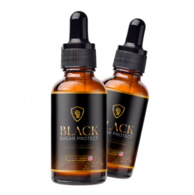
Berberine has become one of the most discussed supplement ingredients in metabolic health, sometimes with claims attached that go well beyond the evidence. It is worth looking at what is actually established.
What Berberine Is, Beyond Black Sugar Protect
Berberine is a bright yellow alkaloid found in barberry, goldenseal, Oregon grape and Chinese goldthread. It has been used for centuries in traditional Chinese and Ayurvedic practice, historically for digestive complaints rather than for metabolic purposes.
Modern interest centres on AMP-activated protein kinase, or AMPK — an enzyme involved in cellular energy regulation. Research has investigated berberine's proposed interaction with this pathway and its relevance to how cells take up and use glucose.
What Berberine Research Shows, And What Black Sugar Protect Cannot Claim From It
Published meta-analyses have reported associations between berberine supplementation and glucose markers in study populations, and it has also been investigated in relation to lipid markers. By supplement standards this is a substantial evidence base.
The qualifications matter. Study quality across the literature varies. Trials typically use several hundred milligrams two or three times daily — deliberately split, because berberine has poor oral bioavailability. And research on an isolated compound at a known dose does not establish what a multi-ingredient product containing an undisclosed amount will do.
Our berberine ingredient page covers this in more depth.
Berberine Safety In Black Sugar Protect Deserves Real Attention
This is the part that gets least airtime in enthusiastic write-ups. Berberine inhibits CYP3A4 and P-glycoprotein, which are involved in metabolising a very wide range of medicines — it can raise blood levels of some statins, immunosuppressants and heart medications.
It may also add to the glucose-lowering effect of diabetes medication, and it should be avoided entirely during pregnancy and breastfeeding due to risks to newborns. Digestive effects are commonly reported when starting.
If you take any prescription medication, berberine is a specific reason to speak with a pharmacist rather than a generic one.
Berberine In Black Sugar Protect Versus Standalone
A standalone berberine product gives you one well-researched compound at a stated, verifiable dose, usually at lower cost. A combination formula such as Black Sugar Protect offers a multi-ingredient approach across six named ingredients instead.
The trade-off is real: breadth of ingredients against dose transparency. Whether complementary ingredients add meaningful benefit over a single well-dosed compound has not been resolved for any specific finished product. See how the formula is positioned.
General information, not medical advice
This article is educational and is not a substitute for consultation with a qualified healthcare professional. The statements on this website have not been evaluated by the U.S. Food and Drug Administration. Black Sugar Protect is a dietary supplement and is not intended to diagnose, treat, cure, or prevent any disease. It is not a treatment for diabetes and must never replace prescribed medication. Individual results may vary.
Related Black Sugar Protect Wellness Reading
More on the product: what Black Sugar Protect supports, how the formula is positioned, the six ingredients, or the FAQ.