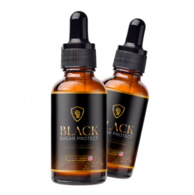
What Licorice Root Is, Before Black Sugar Protect
Licorice root comes from Glycyrrhiza glabra and related species, and has one of the longest documented histories of any medicinal plant. It appears in traditional Chinese medicine, where it is among the most frequently used herbs, as well as in Ayurvedic and European herbal traditions.
Its characteristic sweetness comes from glycyrrhizin, a compound many times sweeter than sugar. Glycyrrhizin is also the compound responsible for licorice's most significant physiological effects — both the ones of interest and the ones of concern.
Some supplements use deglycyrrhizinated licorice, known as DGL, which has the glycyrrhizin removed specifically to avoid those effects. Whether the licorice in this formula is standard or deglycyrrhizinated is not stated, and that is a meaningful gap given what follows.
Traditional Use Of Licorice Root In Black Sugar Protect Context
Traditional use of licorice root spans digestive complaints, respiratory comfort and its role as a harmonising herb in Chinese formulas, where it is often included to balance other ingredients rather than for a primary effect of its own.
It has also been used as a flavouring agent for centuries, which is part of why it appears in so many preparations.
How Licorice Root Fits Into Black Sugar Protect
Licorice is the traditional botanical element of this formula, alongside the more research-driven berberine and the nutrient components.
Preliminary research has examined certain licorice compounds in metabolic contexts, largely at laboratory and early-stage level. Its inclusion reflects traditional use and that preliminary research rather than an established metabolic role.
Licorice Root Research Context For Black Sugar Protect
The research context here is genuinely preliminary, and it would be misleading to present it as more than that.
Laboratory studies have examined certain licorice-derived compounds, including some flavonoids, for activity relevant to glucose and lipid metabolism. Most of this work is cell-based or in animal models. Human clinical evidence for licorice in metabolic support is limited.
Preliminary laboratory research is a legitimate reason for a formulator to be interested in an ingredient. It is not a basis for claims about what a finished product does, and the amount of licorice in Black Sugar Protect is not disclosed.
Limits Of The Evidence For Licorice Root In Black Sugar Protect
Two limitations apply to this ingredient exactly as they apply to the other five, and they are worth restating rather than assuming you read them elsewhere.
The amount is not disclosed. Black Sugar Protect does not publish per-ingredient quantities. Without them, no one can compare this formula against the doses used in the research described above.
The finished product has not been tested. The brand states that the complete Black Sugar Protect formula has not been studied in its own clinical trial. Research on Licorice Root as an isolated compound does not establish what this product does.
Licorice Root Safety Context For Black Sugar Protect Users
This is the most important safety section across all six ingredient pages, and it deserves reading properly.
Glycyrrhizin, licorice's main active compound, affects an enzyme involved in cortisol metabolism. With regular consumption this can produce a condition sometimes called pseudohyperaldosteronism, whose effects include raised blood pressure, lowered potassium levels, fluid retention and swelling. In serious cases low potassium can cause muscle weakness and abnormal heart rhythms.
This is not theoretical or rare. It is well documented, it has been the subject of public health warnings about black licorice confectionery, and it can occur with regular consumption over weeks rather than requiring extreme intake.
Specific caution applies if you:
- Have high blood pressure, or take blood pressure medication
- Take diuretics — the potassium-lowering effects can compound
- Take digoxin or other heart medication, where low potassium is particularly consequential
- Have heart, kidney or liver disease
- Take corticosteroids
- Are pregnant — licorice is not considered suitable during pregnancy
Given that blood pressure concerns frequently accompany blood sugar concerns, this interaction profile is particularly relevant to the people most likely to consider a product like this. If that describes you, speak to your doctor or pharmacist before using any licorice-containing supplement. This is a specific, evidence-based caution rather than a formality.
General information, not medical advice
This page describes what an ingredient is and what research exists. It is not a claim that this ingredient produces any specific effect and it is not medical advice. Black Sugar Protect is a dietary supplement and is not intended to diagnose, treat, cure, or prevent any disease. It is not a treatment for diabetes. Never stop or change prescribed medication because of anything you read here. Individual results may vary.
Related Black Sugar Protect Ingredients
Continue with all six Black Sugar Protect ingredients, how the formula works, the benefits overview, or current pricing.